Led the transformation of FileMaker Pro from a modal-heavy platform to an AI-powered, end-to-end development experience - improving usability, increasing adoption, and enabling long-term product growth.
Overview
My Contributions
• Defined product vision to scale AI from isolated dialogs to a unified, platform-wide experience
• Translated insights and competitive analysis into a centralized UX strategy
• Partnered cross-functionally to align design, product, and engineering on a phased modernization plan
Deliverables
• Product Spec
• Prototype
• SwiftUI Development
Understanding the problem
Background
FileMaker Pro is a widely-used low-code platform with disjointed architecture and workflows
Claris leadership prioritized AI to stay competitive and respond to disruption in the low-code space
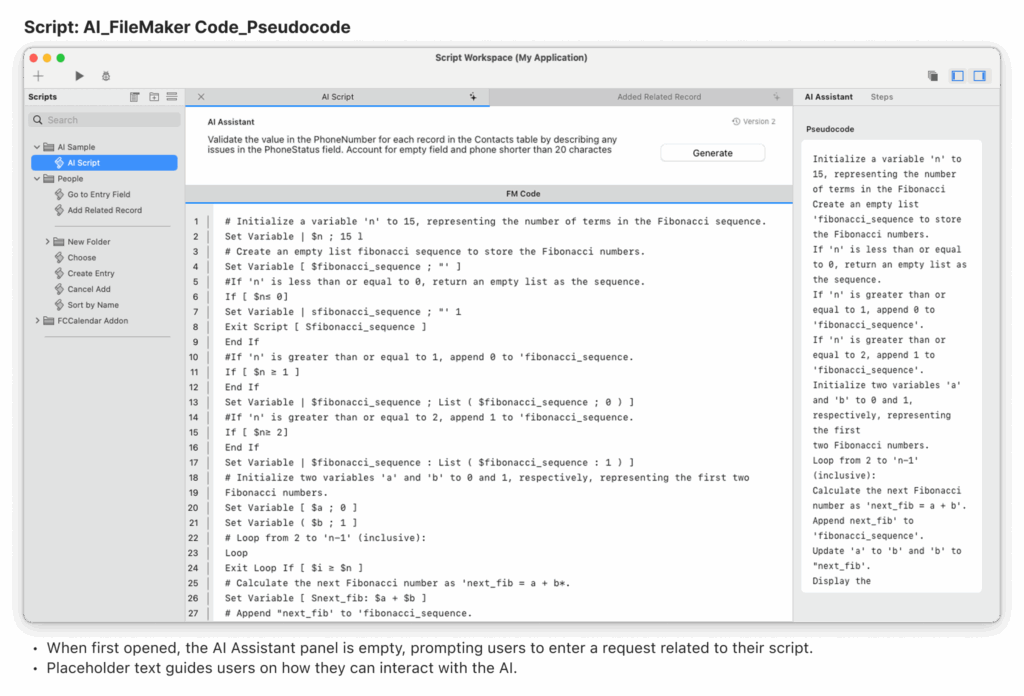
Product Owner (Ronnie) had gathered customer feedback and identified Calculations and Script Workspace as AI pilot areas
Engineering built a quick MVP to test feasibility
Customer Feedback
Customers liked the AI direction but wanted it embedded across the full development flow
They criticized the disjointed app-building experience and praised Cursor’s centralized layout
These customers closely aligned with our primary persona, Paula, reframing our strategy toward end-to-end AI support
Product Owner and I leading a stakeholder feedback session to evaluate the MVP direction and identify areas for improvement.
Problem Statement
The MVP addressed isolated pain points, but the broader development workflow remained fragmented
Customers struggled with modal overload and disconnected steps across the platform
To make AI truly valuable, we needed to redesign the platform structure to support end-to-end intelligence
Define
To reimagine the product with AI, I first identified user friction and high-impact AI opportunities.
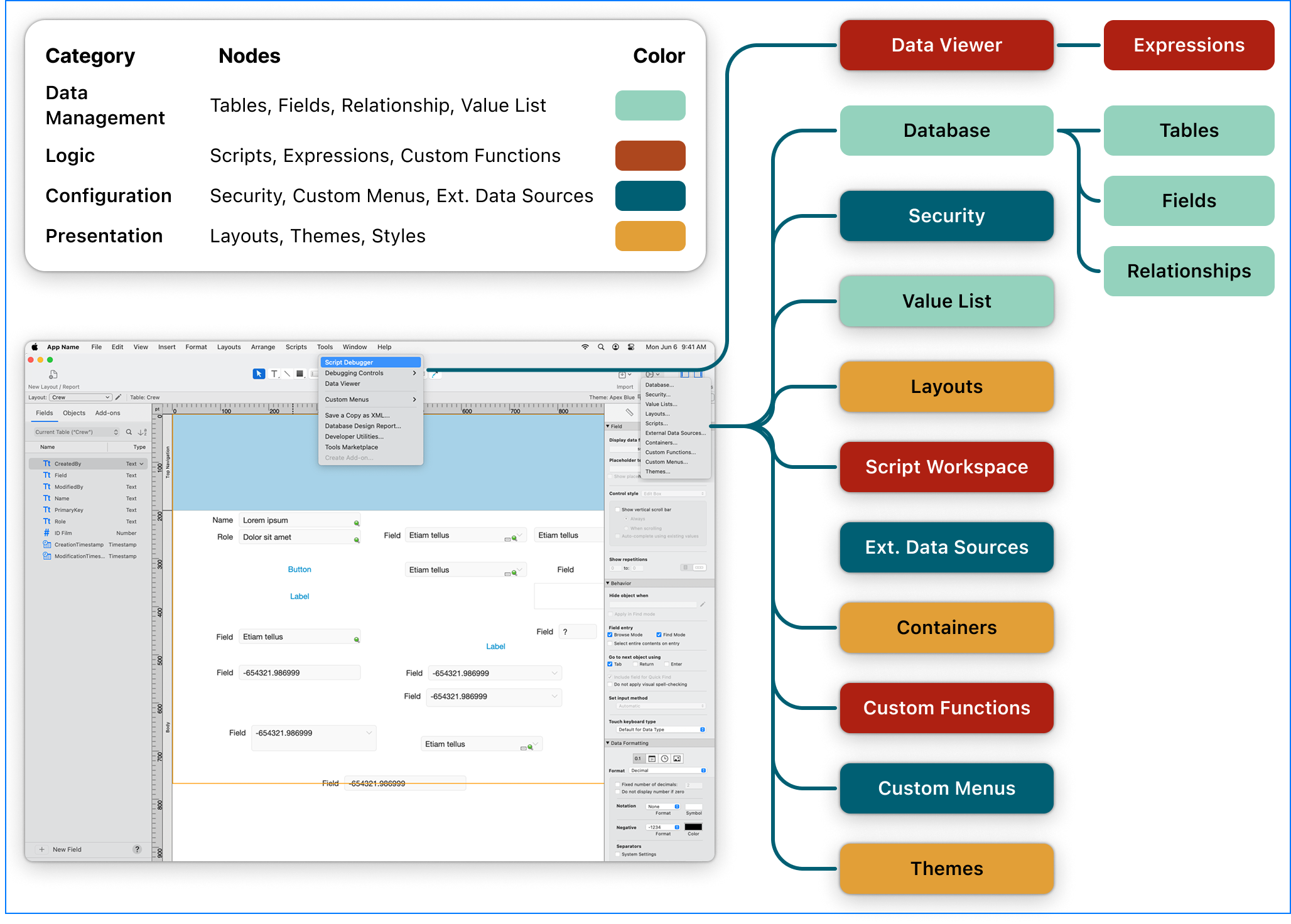
Mapped the end-to-end app creation journey in Layout mode — revealing 15+ modals accessed via manage Database causing major friction points
Identified key opportunities where AI could reduce complexity and improve continuity
Strategic foundation for redesigning the platform
Ideation
Research & Direction
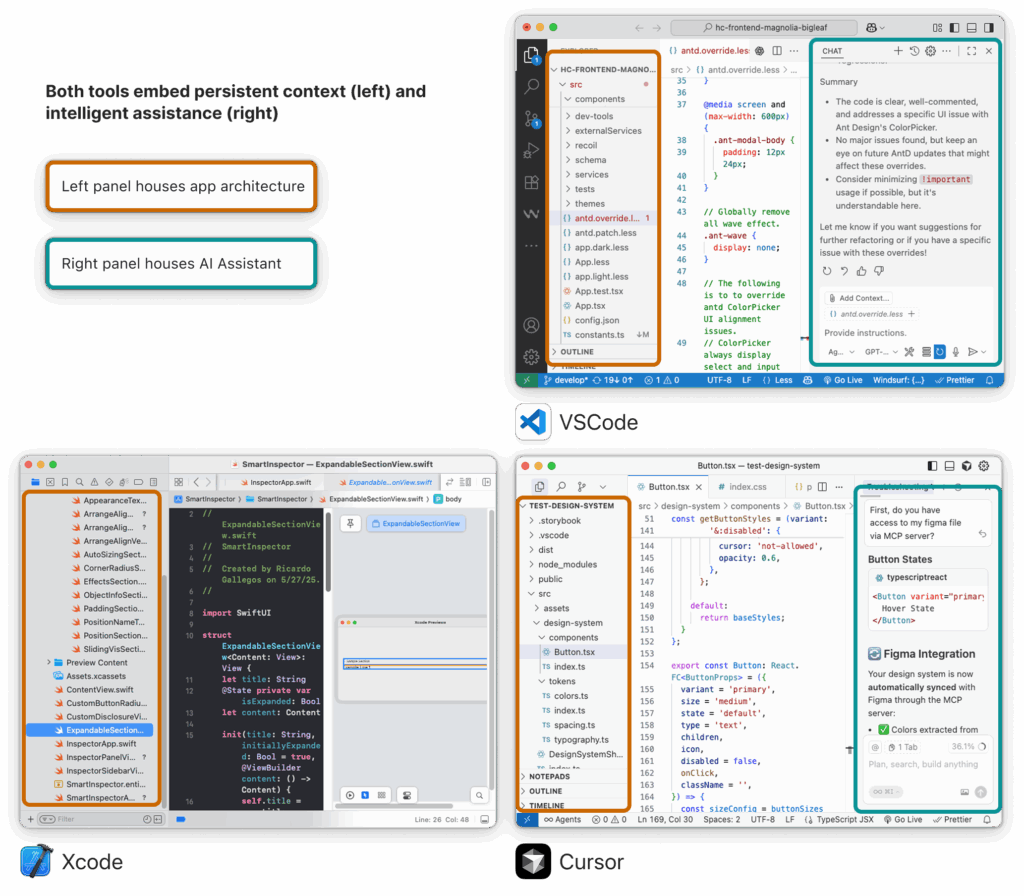
Studied Cursor, VSCode, and Xcode to explore scalable AI integration in developer workflows
Identified Cursor’s strength: full-app awareness and intuitive IDE-style layout
Evaluated feasibility using Apple’s design system and Xcode references
Cursor, XSCode Xcode research
Concept Development
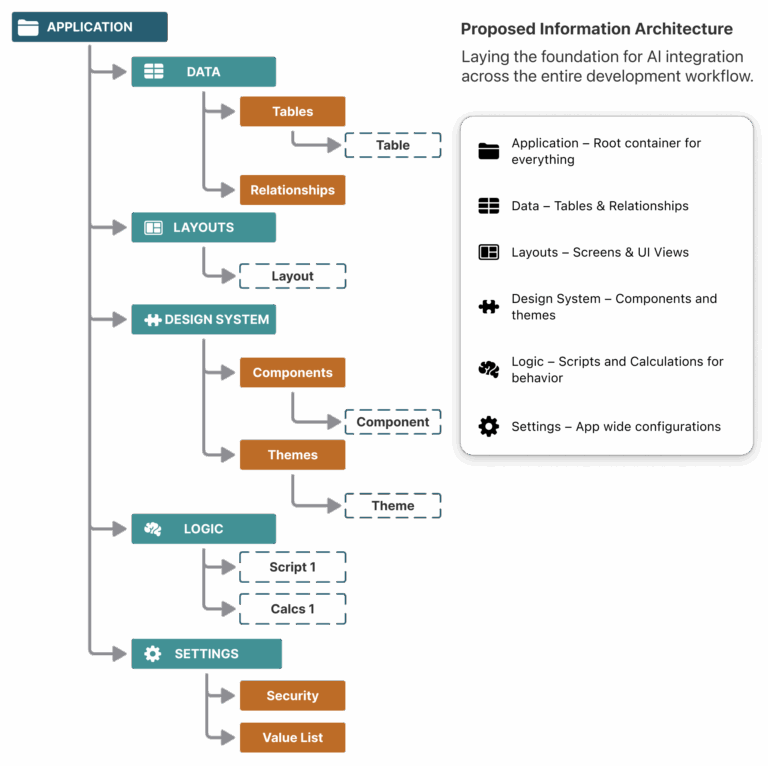
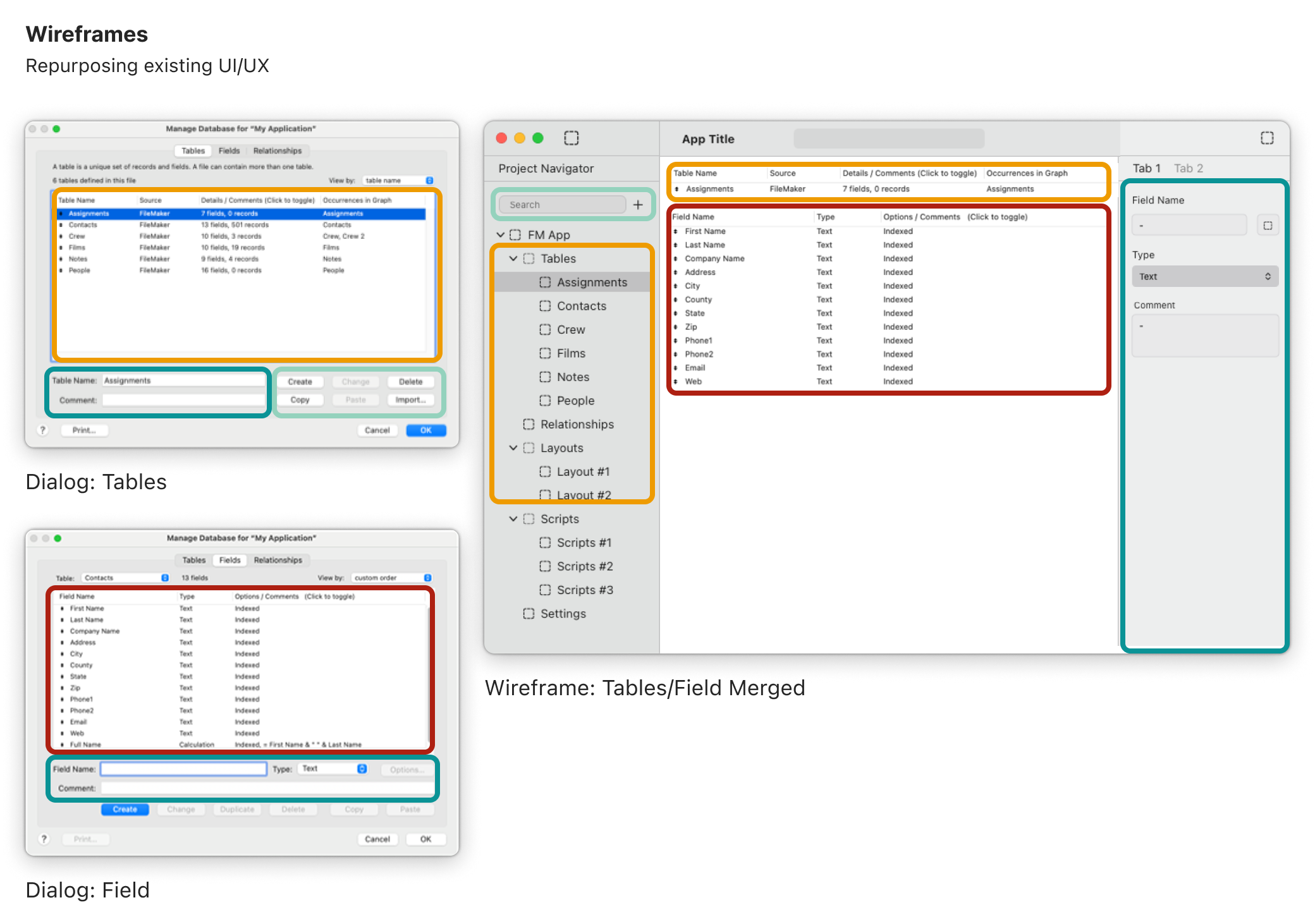
Created wireframes centralizing the app-building flow (tables → relationships → layouts → scripts)
Iterated to balance new structure with legacy UI familiarity
Information Architecture
Design Solution
Unified Workflow
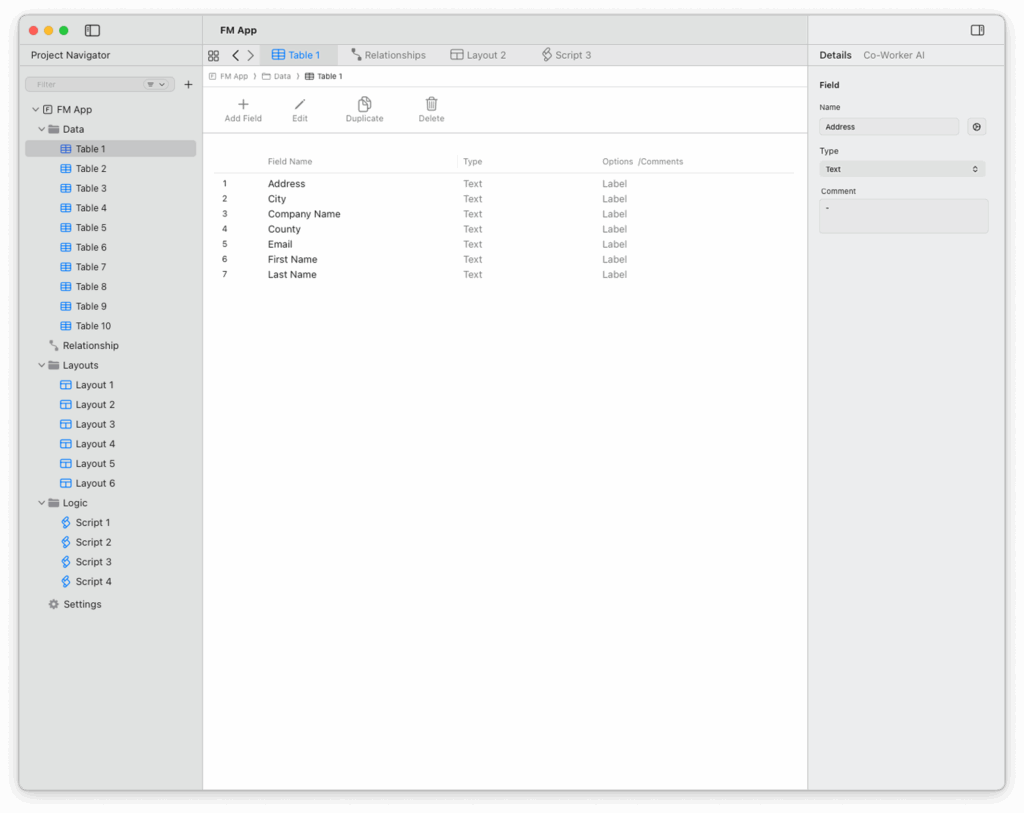
Reduced 15+ modals to 5 core panels to streamline app creation
Introduced a persistent left-hand panel to unify development flows
Maintained familiar patterns to reduce onboarding friction for legacy users
Embedded AI and future-proof architecture
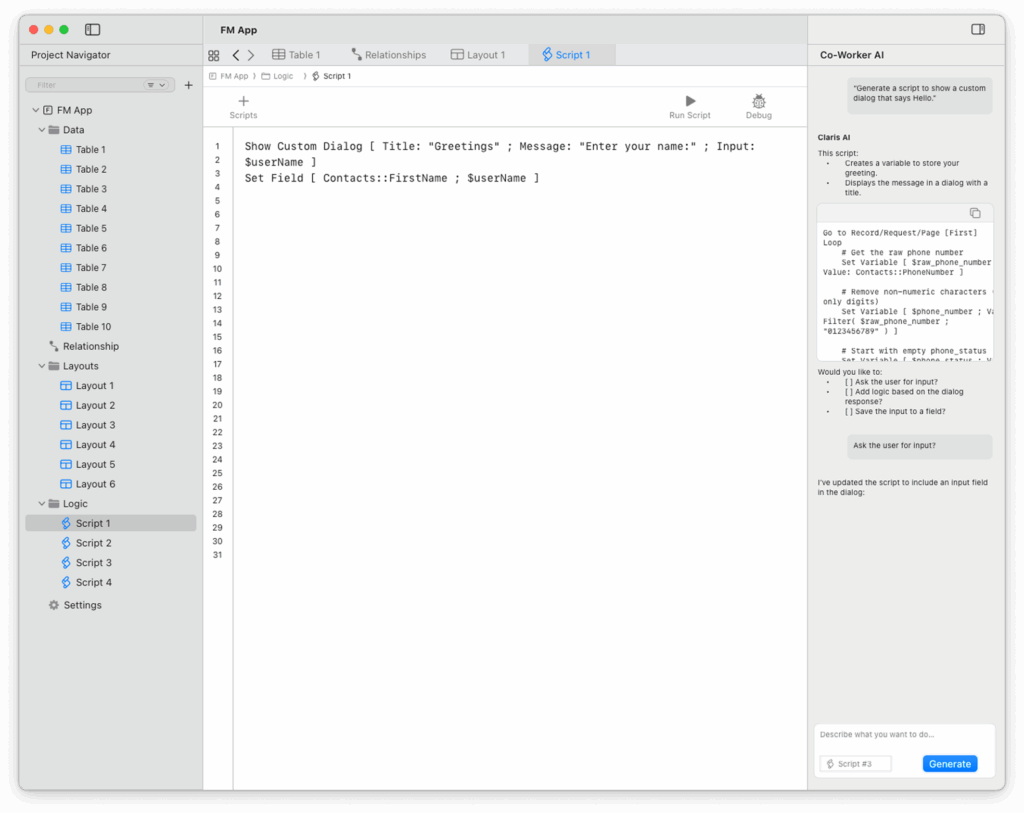
Embedded AI suggestions inline with granular control (accept/reject)
Added canvas preview to compare current vs AI-enhanced logic
Designed components to support SwiftUI migration and future AI use
Execution
Validating with customers and aligning stakeholders
Validated direction with 10+ customers during weekly “kitchen” feedback sessions
Aligned product, engineering, and leadership around a 3-phase rollout
I’m leading Phase 3 front-end build in SwiftUI to enable a future-proof, IDE-style experience
Outcomes
End-to-End AI Integration
AI assistance was extended beyond the initial MVP to support the entire app-building workflow — including tables, relationships, layouts, and logic. This provided contextual intelligence at every step, aligning with user expectations for a modern development experience.
Unified, Streamlined Workflow
Reduced 15+ fragmented modals into 5 core panels, introducing a persistent left-hand navigation and AI-aware layout. This dramatically improved usability, reduced friction, and boosted developer success rates.
Future-Ready Architecture (SwiftUI + AI)
Designed and implemented modular components in SwiftUI to support long-term scalability. The architecture now supports AI extensibility, future integrations, and faster iteration cycles across macOS.
Tangible Business Value
Modernizing the platform and embedding AI across all workflows led to improved user retention, faster onboarding, and measurable workflow improvements — resulting in an estimated $1M–$3M in business impact through customer retention and expanded usage.